

3 years ago
Prepared by: Dr. Abdel Fattah Al-Ajlouni
Published by: PM-Line Station
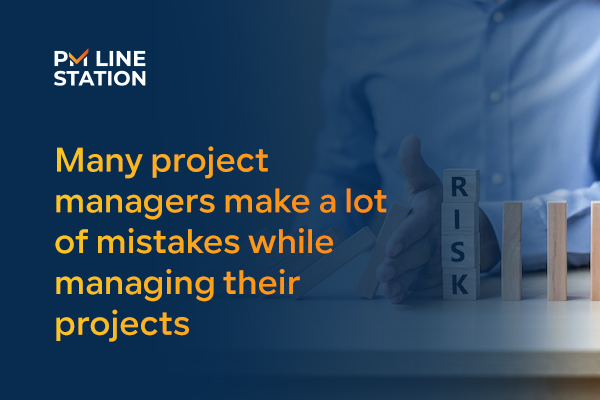
Many project managers get many things wrong while managing their projects. One of the worst mistakes a project manager can make is not managing the risks in the project, and sometimes even ignoring the risk management in the project altogether.
When I became acquainted with Risk Management in 2005 within the PMBOK book, it was a quantum leap for me, as I discovered new and interesting things, including that projects do not exist without risks, including that risk may be an opportunity, how risks are arranged according to priorities, and how risks are converted into numbers. probability distribution curves, and so on.
Today, Agile Project Management surprises us with completely new concepts for dealing with risks. Let me simplify it with the following rules:
Agile project management tends to be proactive in facing risks, as it proceeds from the rule that the longer the project time, the greater the possibility of risks, so dividing the project into iterations, sprints reduces the chances of these risks occurring.
Agile project management believes that the best way to deal with a risk is to face it at the earliest possible opportunity, so it is very likely that the first iterations will be allocated to confront and address risks in what we call Risk Spikes, because it is better for the project to fail early and safely than to fail later. Failing safe and fast. For example, if there is a risk in the possibility of providing a certain raw material needed by the project, the agile project management urges you to face this risk directly, to see if it is possible to provide it or not, before you proceed with the project work.
The risk is an anti-value, that is, the risk that is taken into consideration is only the threats (contrary to the project management knowledge guide, which states that the risk can be an opportunity as well) that we can face during the project, and these threats are quantitatively converted into values. Negative in order to compare it with the positive values that are given to the features that we want to work on achieving, and on this basis the required work record is arranged with priorities. This gives us more focus in our work. As for how the value of the risk is calculated, we usually use the Expected Monetary Value by multiplying the probability of the risk by its impact (time or financial) if it happened.
Most lean management methodologies encourage team members to be Generalizing Specialists, that is, they have approximately the same level of skills so that any person in them can exchange his role with anyone else, in order to avoid the risks related to the absence or loss of some team members. In the XP methodology, for example, there is the concept of Pair Programming where two people work together, where one of them writes the code and the other tests it, then they exchange roles and so on..
Follow-up and control of risks is through a chart we call the Risk Burndown Chart, which is another chart of lean management charts that are easy to understand, manual and do not need low-tech, high-touch technical tools. This chart shows the risks in the project from the beginning and of course these risks are reduced. By confronting it, as mentioned earlier, early until we reach the end of the project, as shown, for example, here:
Last but not least, Agile Project Management draws your attention to the fact that Work in Progress (WIP) is risky, so the faster we get the work done, the more risk we eliminate.
Once again, I believe that the lean management method will develop a lot in the coming days and will have different applications in many applied fields that do not stop at the software industry, although it is the leading industry in developing lean project management concepts. And I wish you, dear interested reader, to start now by getting to know these concepts and applying them in your field of work to benefit from them as much as possible.
3 years ago
Prepared by: Dr. Abdel Fattah Al-Ajlouni
Published by: PM-Line Station
3 years ago
Prepared by: Dr. Abdel Fattah Al-Ajlouni
Published by: PM-Line Station

3 years ago
Prepared by: Dr. Abdel Fattah Al-Ajlouni
Published by: PM-Line Station